

Dr. M.P. Dehnel collaborates with the following scientists and researchers at the present time. A brief description of the collaborations are provided below. The research undertaken by these researchers is not limited to the particular collaborative efforts described here-in. Typically, each collaborator is undertaking research programmes having a much wider breadth and reach.

Dr. C. Hoehr
Director – Life Sciences at TRIUMF; Adjunct Professor, UVic
Specializes in medical isotope production and nuclear instrumentation. Her work focuses on developing novel target systems and detector technologies for radioisotope generation, with applications in medical imaging and cancer diagnostics.
Collaborations have primarily focused on cerium doped quartz and borosilicate fiber particle detection technologies. Over the years measurements have been made and diagnostic devices developed to detect charged particles, neutrons, and gammas with undergraduate co-op students, and graduate students. Recent and ongoing research in this area includes:
Miranda Niddrie
Miranda Niddrie is a 4th Year Honours Physics student in the Department of Physics and Astronomy at the University of Victoria. Her capstone project is under the academic supervision of Dr. Morgan Dehnel, Dr. Tobias Junginger, and Dr. Cornelia Hoehr. As part of her research, Miranda is developing data-driven thermal models of liquid radioisotope targets using ANSYS to replicate internal temperature behavior and enable virtual prototyping of next-generation cyclotron targets. This work aims to improve radioisotope production yield and efficiency and was conducted from September 2025 to April 2026.
Janina Hohnholz
Janina recently graduated with a M.Sc. from the Technical University of Aachen, Germany under the co-supervision of Dr, C. Hoehr, TRIUMF. As part of her research, she undertook neutron beam measurements with cerium doped quartz fibers and borosilicate fibers at University of Washington’s Scanditronix type Medical Cyclotron to ascertain the efficacy of these fibers for this application together with Crystal Penner. The initial push for this research work came from Dr. Dehnel, but also depended heavily on collaboration with Marissa Kranz, Director of the University of Washington Medical Cyclotron Facility and the former Director, Eric Dorman.
Sam Usherovich
Sam is a Nuclear Medicine Research Associate at TRIUMF under the supervision of Dr. Hoehr. He has advanced a 4-way neutron/gamma detector in terms of design/development but also in terms of experimental verification. This device can be mounted external to a beam pipe and provides non-intercepting beam position information, but also a response that is linearly related to beam current. A recent publication of this work was at IPAC2023, the title of the paper “A Novel Fiber-Optic Beam Monitor”, and the authors were: C. Hoehr, S. Usherovich, M. Dehnel, S. Braccini, P. Casolaro, A. Gottstein, I. Mateu. The work depended heavily on a collaboration between the group’s of Dr. Hoehr at TRIUMF, and Dr. Braccini at the University of Bern.
Dr.Hoehr and Dr. Dehnel co-supervised a TRIUMF/D-Pace Post Doctoral Fellow, Dr. Anand George, per a MITACS/D-Pace funding agreement. Strong support for this project was also provided by Dr. Stephane Melanson, D-Pace. The project purpose was to develop a commercial grade negative hydrogen ion source ~10 mA CW @ 30 keV powered by RF rather than a tantalum filament. This project successfully wrapped up in 2024.

Dr. Gwenael Fubiani
Professor, Department of Physics & Astronomy, University of Victoria
Focuses on plasma physics and electric propulsion, including Hall thrusters and ion sources. His research combines experimental diagnostics with modeling to better understand plasma behavior and improve space propulsion systems.
Collaborations have been ongoing for several years in the advancement of computational plasma modeling and the modeling of beam extraction from plasmas using both explicit and implicit Particle-In-Cell (PIC) existing and newly developed codes. Dr. Fubiani provides the world-class technical and scientific expertise in this area to guide and educate several young researchers in this area, whilst Dr. Dehnel is active in discovering important problems to solve that are in the territory between discovery science and practical engineering/implementation for applications using ion sources in medicine, energy conservation, semiconductor manufacture, etc.. Recent and ongoing research in this area is being undertaken with the following postdocs and students:
Dr. Nicolas Savard – TRIUMF/D-Pace Post Doctoral Fellow – MITACS funded (see entry above under Dr. Rick Baartman, TRIUMF). Detailed R&D supervision and guidance provided by Dr. Fubiani.
Dr. Anand George – TRIUMF/D-Pace Post Doctoral Fellow – MITACS funded (see entry above under Dr. Cornelia Hoehr, TRIUMF). Detailed R&D supervision and guidance on aspects involving PIC modeling provided by Dr. Fubiani.
Cole Dutchyn – University of Saskatoon – Bachelor’s Co-op Student at D-Pace from May-August 2024 – MITACS Funded. Academic Supervisor Dr. Lenaic Couedel, University of Saskatchewan, Industrial Supervisors Dr. M. Dehnel, and Dr. S. Melanson – D-Pace. Detailed day to day R&D supervision and guidance provided by Dr. Savard, and Dr. Fubiani.
Connor MacKenzie – University of Saskatchewan, Master’s Student, UBCO – Bachelor’s Capstone Project from September 2024 – April 2025. Project instituted by Dr. Dehnel with detailed R&D supervision and guidance provided by Dr. Savard and Dr. Fubiani.
Jasmin Deguire – UVIC – Ph.D. Student who started January 1, 2025. Academic supervisors Dr. T. Junginger, and Dr. M. Dehnel. Funding by MITACS/D-Pace with supervisors for funding purposes Dr. T. Junginger UVIC, and Dr. S. Melanson, D-Pace. Detailed R&D guidance and supervision on science/technical aspects provided by Dr. Fubiani, and Dr. Savard.
Ben Warfield – UVic Department of Physics & Astronomy – Ph.D. – Selkirk College funded research. Project – Dr. Junginger is the Academic Supervisor, and Dr. Dehnel, as the Selkirk Ion-source Research Chair, is the co-supervisor for experimentation at the SIRC.
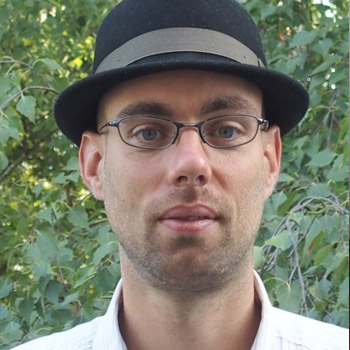
Dr. Tobias Junginger
Professor, Department of Physics & Astronomy, UVic
Works in accelerator and ion source physics, particularly plasma behavior and ion beam generation. His research often combines experimental systems with simulation (e.g., Particle-In-Cell modeling) to improve ion source performance and beam transport.
Dr. Junginger is a strong link between UVIC and TRIUMF, in terms of supervising many graduate student projects jointly for both institutions. Our collaborations involve jointly supervising a Master’s student, Andrew Paul (graduated December 2023, MITACS funded). Andrew utilized a TRIUMF-type volume-cusp ion source to bombard neutral gas species with negative hydrogen ions. A certain fraction of the time, an electron would be transferred to the neutral gas forming a secondary negative ion species at low energy, which was accelerated by a 10 kV electrostatic accelerator designed and built by the student. The testing was done at a D-Pace ion source test stand. D-Pace onsite supervision and advice was provided by Dr. Stephane Melanson.
Jasmin Deguire – UVic Department of Physics & Astronomy – Ph.D. – UVic/D-Pace funded MITACS project, Jasmin Deguire, who started the degree January 2025. Jasmin will study explicit Particle-In-Cell (PIC) computations of ion source plasmas, and will compare the simulation results to experimental measurements at a D-Pace test stand. Dr. Junginger is the Academic Supervisor, and Dr. Dehnel is the project initiator and co-supervisor.
Ben Warfield – UVic Department of Physics & Astronomy – Ph.D. – Selkirk College funded research. Experiments to take place at the Selkirk Ion-source Research Centre (SIRC). Project initiator is Dr. Oliver Kester, Director TRIUMF Accelerator Division, and the topic is a study of Penning Ion Source technology for ion species with mass less than 30 AMU, and q = A/6 aiming to determine through R&D whether the Penning can achieve sufficient beam currents, beam quality, and source lifetime to be potentially utilized within TRIUMF’s OLIS set-up. Dr. Junginger is the Academic Supervisor, and Dr. Dehnel, as the Selkirk Ion-source Research Chair, is the co-supervisor for experimentation at the SIRC.

Dr. Karen Kavanagh
Professor, Physics Department, SFU
Specializes in ion beam microscopy and materials science, particularly using helium ion microscopy to study material interactions. Her work includes optimizing materials for ion conversion and nanoscale characterization.
Our collaboration is highly dependent on the Helium Ion Microscope in Dr. Kavanagh’s laboratory. The microscope’s positive Helium ion beam is utilized by our jointly supervised PhD student, Philip Jackle (NSERC funded), to strike and pass through a very thin foil resulting in a fraction of the transmitted ions being converted to an energetic negative Helium ion. The research focuses on optimal material choices, and optimal thicknesses to maximize the creation of energetic negative Helium ions.
Philip Jackle, Ph.D. Student SFU, NSERC/D-Pace Funded. SFU Supervisor Dr. K. Kavanagh, D-Pace Supervisor – Dr. S. Melanson. More project details here.

Dr. Seth Veitzer
Field Application Engineer, Silvaco
Works on advanced plasma and beam physics simulations using tools like VSim. His research centers on Particle-In-Cell (PIC) modeling, plasma behavior, and ion beam extraction for accelerator and industrial applications.
Tech-X has been purchased. The VSIM® plasma simulation software developed by Tech-X Corporation has been licensed by SIRC to support this work.
Tech-X’s VSIM code is being collaboratively advanced to not only compute the plasma parameters in ion sources for various input constraints and parameter settings, but to then develop sub-routines to effectively extract beams from such ion source plasmas, so the effects of the various input constraints and parameter settings on the beam characteristics as well as plasma parameters can be ascertained. Such advancements will be very useful for academic and industrial ion source and Low Energy Beam Transport (LEBT) systems designers who must match ion beams properly with regards to an accelerators acceptances in phase space. This is an important innovative development because the commonly used ion-optical codes do not have a means to determine the input beams to a LEBT as a function of the plasma condition.
VSim is a massively parallel simulation tool implementing Finite Difference Time Domain (FDTD) Particle-In-Cell (PIC) algorithms including self-consistent and energy-conserving models for EM fields, accurate models of plasma chemistry, particle/surface interactions, space-charge, and has a range of diagnostics and built-in analysis tools.
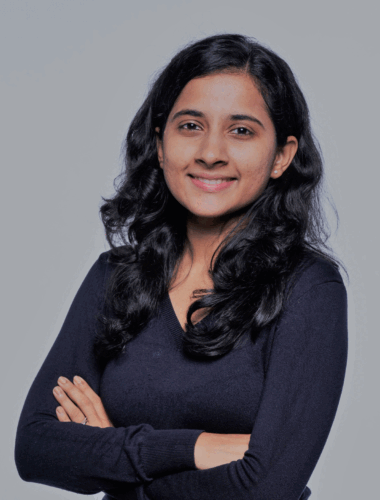
Dr. Sravya Tekumalla
Assistant Professor, Mechanical Engineering, University of Victoria
Specializes in additive manufacturing of metallic materials, with emphasis on microstructure control and mechanical performance. Her work spans aerospace, biomedical, and electronics applications, including advanced alloys and nanocomposites.
Dr. Tekumalla’s research explores additive manufacturing to develop metallic materials for aerospace, automotive, biomedical, and electronics, focusing on microstructure control, texture optimization, and multi-scale mechanical properties. Her projects include designing lightweight alloys, exploring in-situ nanocomposites, and investigating the recycling of metallic waste. We aim to initiate a Master’s project regarding R&D related to ion implantation for semiconductors using the Penning ion source technology. A key goal will be to utilize Dr. Tekumalla’s expertise to increase cathode lifetime.
Robert Gagnon, Master’s Student, UVic (Department of Mechanical Engineering). SIRC Umbrella Mitacs funded with D-Pace as industrial partner. Academic Supervisors: Dr. Sravya Tekumalla (UVic), Dr. Morgan Dehnel (SIRC) and Commercial Supervisor, Dr, Anand George (D-Pace). More project details here.
Completed Collaborations

Dr. Andrew Rowe
Professor, Mechanical Engineering, UVic
Focuses on energy systems and applied engineering, including superconducting technologies. His collaboration here involves developing compact, energy-efficient superconducting magnets for mass spectrometry and isotope separation.
Our collaboration involves co-supervising an undergraduate Mechanical Engineering Capstone project undertaken by Isabel Dinneny to develop a super-conducting coil for a mass spectrometer magnet. The purpose is to explore smaller, and more energy efficient magnets of this type for isotope separation.

Dr. Suzie Sheehy
Associate Professor of Accelerator Physics, University of Melbourne
Focuses on accelerator physics with applications in medical technologies, especially proton therapy. Her group develops compact, energy-efficient accelerator systems using permanent magnets for cancer treatment.
Dr. Sheehy and her research group are developing an innovative proton therapy system utilizing permanent magnets. Such a system will minimize set-up times between each patient dose at a different energy, and the system will be energy efficient. Dr. Dehnel helped the group through co-ordinating the donation of a proto-type D-Pace UniBEaM diagnostic device to the group’s test set-up, which utilizes a 3MV Pelletron accelerator. Feedback from the students on the performance of the UniBEaM device has been useful in advancing the technology.

Dr. R. Baartman
Accelerator Physicist, TRIUMF
An expert in beam dynamics and accelerator design, particularly cyclotrons and ion optics. His work involves optimizing charged particle transport and improving accelerator performance for both research and applied technologies.
Dr. Baartman and Dr. Dehnel are co-supervising a TRIUMF/D-Pace Post Doctoral Fellow, Dr. Nicolas Savard, per the MITACS/D-Pace funding agreement. Strong support and guidance for this project is also provided by Dr. Gwenael Fubiani, CNRS, and additional guidance is provided by Dr. Thomas Planche, TRIUMF. The project purpose is to investigate implicit Particle-In-Cell (PIC) plasma computations, and to determine if there are any advantages over explicit PIC computations.